Opening Doors to Taiwan at Austria’s Largest Education Fair



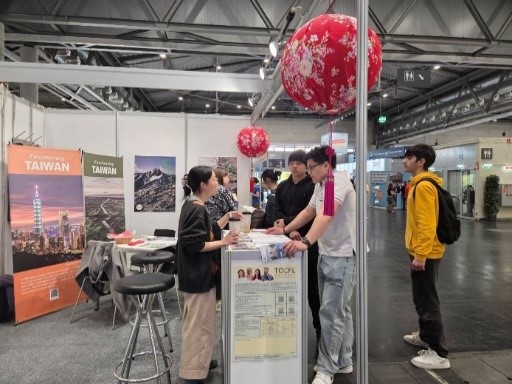
The Education Division of the Taipei Economic and Cultural Office in Austria once again took part in Austria’s largest educational fair: BeSt – the Fair for Careers, Studies and Further Education, from March 12 to 15, 2026. This four-day fair held in Vienna is jointly organized each year by the Austrian Federal Ministry of Education, the Federal Ministry for Women, Science and Research, and the Austrian Public Employment Service. BeSt caters to an enormous range of people: secondary and university students and graduates, parents, teachers, school and university drop-outs, people in work, and people interested in continuing education. It offers a diverse range of exhibitors, workshops, and numerous presentations providing information about academic programs, vocational training, and continuing education, future career paths and educational developments.
BeSt is always an excellent opportunity for the Education Division of the Taipei Economic and Cultural Office (TECO) in Austria to encourage Austrian students—and students from neighboring countries too—to study in Taiwan; to provide a lot of related practical information, especially regarding Taiwan’s higher education system, and Mandarin Chinese language learning; and to answer any questions people raise.
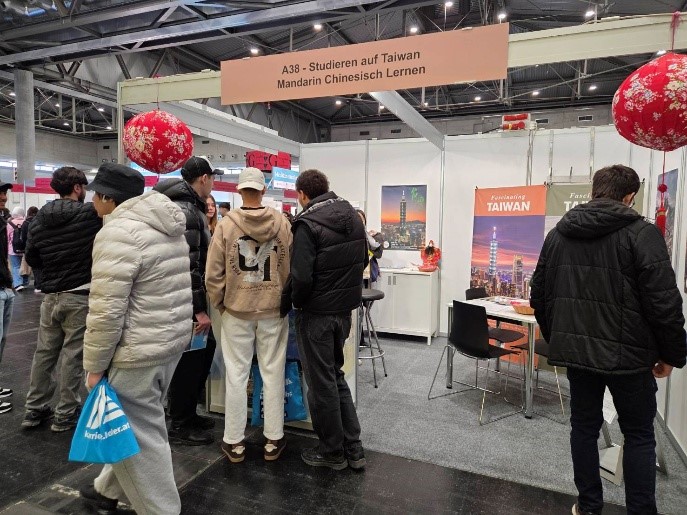
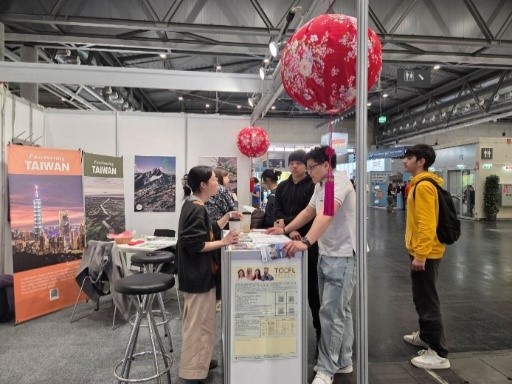
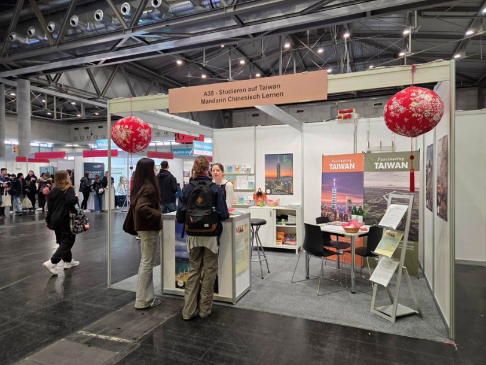
This year BeSt had 309 exhibitors and more than 55,000 visitors, and the TECO staff at the Study in Taiwan booth welcomed and interacted with approximately 500 visitors. Students considering studying abroad who were interested in Taiwan as a study destination asked many questions about the universities there, exchange programs, traditional Chinese medicine programs, short-term and summer courses, and scholarships they can apply for. Some people asked about the possibility of starting to learn more about Taiwan’s language and culture at the Taiwan Chinese School in Vienna. Other people who were walking past the booth stopped to try some Taiwanese snacks being offered. They were surprised to hear about the wide range of programs available in Taiwan, including degree programs taught in English.
It was encouraging to see how different booths that complemented each other worked in a mutually supportive way to provide the best possible advice. The Study in Taiwan booth and the booth of the Department of East Asian Studies at the University of Vienna often referred people to each other to obtain details of Mandarin Chinese language programs and resources, and opportunities for studying abroad.