Promoting “Study in Taiwan” in Vietnam



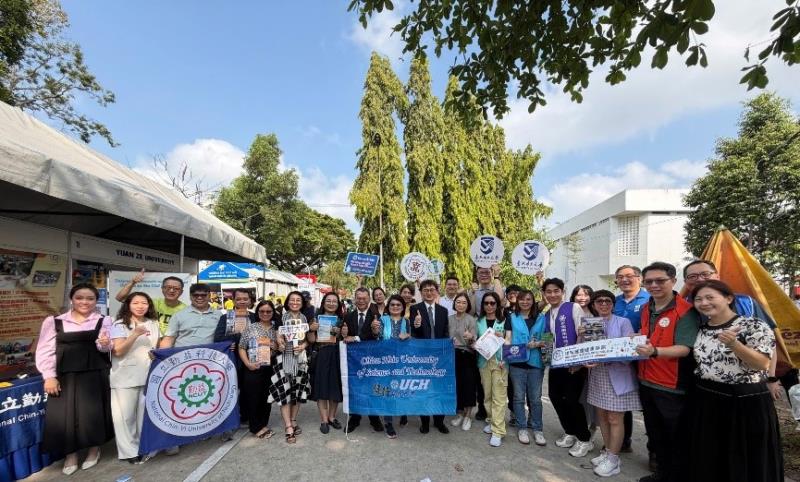
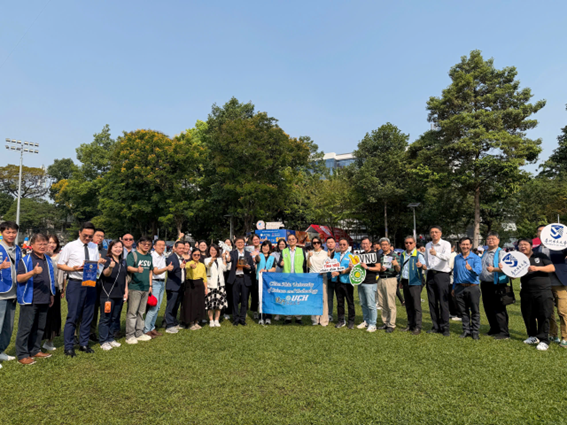
The Ministry of Education is working to deepen bilateral educational cooperation with Vietnam and increase student mobility. With assistance from the Education Division of the Ministry of Education in Ho Chi Minh City, a delegation of representatives of 48 universities in Taiwan took part in two university admission and career information days organized by Vietnam’s Ministry of Education and Training in collaboration with Tuổi Trẻ newspaper, to promote Study in Taiwan.
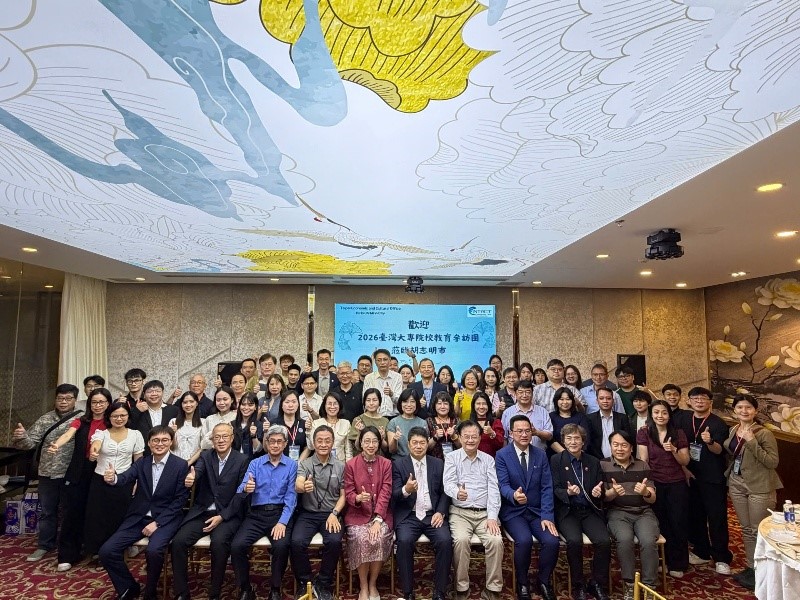
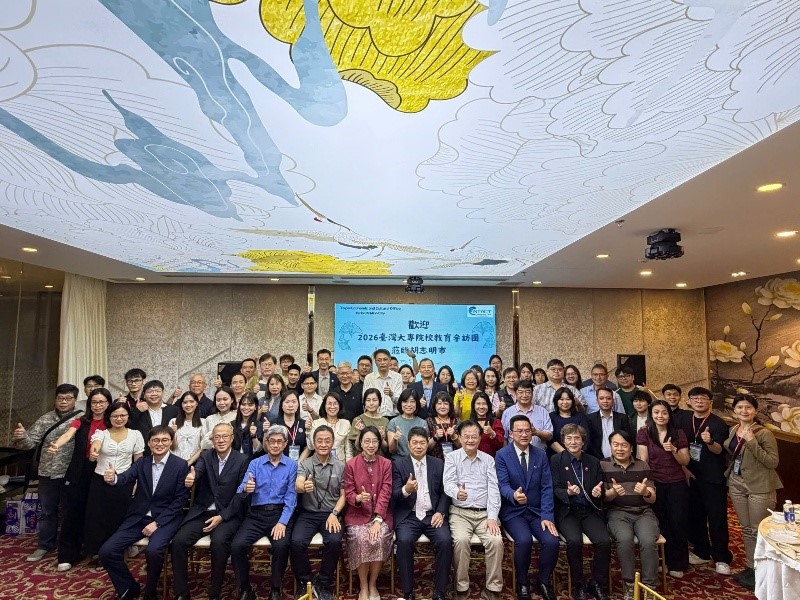
Han Kuo-Yao 韓國耀, Director-General of the Taipei Economic and Cultural Office in Ho Chi Minh City, and Lin Wei-Chih 林韋至, Educational Counsellor at the Education Division there hosted a welcome banquet for the representatives of Taiwan’s higher education to discuss student recruitment strategies and local outreach efforts to strengthen long-term engagement and establish stable higher education and research cooperation between Taiwan and Vietnam. Educational Counsellor Lin Wei-Chih said that the number of Vietnamese students studying in Taiwan—recently almost 53,000—has continued to grow. They now constitute the largest number of international students in Taiwan, more than twice as many as those from the country with the second largest number. In 2026 Vietnam received the largest allocation of Ministry of Education Taiwan Scholarships, scholarships for students undertaking a degree program at any level at a university in Taiwan. This is part of the Ministry’s ongoing efforts to strengthen educational cooperation and exchanges with Vietnam.
The first university admission and career information day was held in Ho Chi Minh City on March 8, and the second was held in Can Tho on March 22. The focus was on helping Vietnamese students make informed choices about their academic paths: selecting the right major can shape future career opportunities.
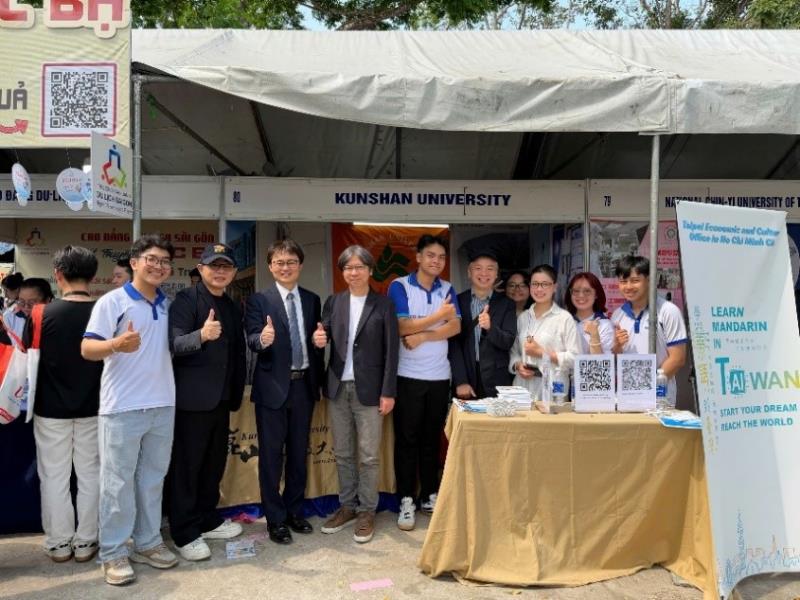
Representatives of more than 130 Vietnamese and international universities took part. The participating universities set up consultation booths and met directly with students and parents, offering on-the-spot details of academic programs, admission requirements, study pathways, and scholarship opportunities, and the atmosphere was very lively.
The two days attracted nearly 20,000 students, reflecting the growing interest of Vietnamese students in overseas study. Many interacted with the representatives of the 48 universities in Taiwan, asking about programs and scholarships available, and received immediate details of their options for studying there.
Vietnamese students are very interested in science and technology fields. Đỗ Thiện, a high school student from An Giang Province who has been closely following developments in Taiwan’s medical technology sector attended to find out whether he’s eligible to study in Taiwan, and if so, how to apply for a Ministry of Education Taiwan Scholarship. “I’m especially interested in healthcare and technology, and Taiwan offers strong programs in both,” he said. Trương Nguyễn Lê Khoa, a student at the University of Science, Vietnam National University–Ho Chi Minh City, said he is considering further study of wafer fabrication and IC design in Taiwan and asked about programs in semiconductor-related fields. The availability of programs taught in English will be a key factor in his decision.
Strong interest was observed in fields such as AI, semiconductors, healthcare, and business, and how to apply for programs and available scholarships. The students had many questions about programs that integrate academic training with industry needs, and future career pathways. To address this interest, National Taiwan University of Science and Technology and Kun Shan University worked together to present a forum in Can Tho, to give students information about Taiwan’s INTENSE Program (the International Industrial Talents Education Special Program). The INTENSE Program offers an enormous range of specialized programs aligned with industry needs, which will attract more Vietnamese students to Taiwan. Educational Counsellor Lin Wei-Chih spoke at the forum about Taiwan’s industry-oriented skilled workforce development policies, and Taiwan’s educational cooperation with Vietnam.